

 Contact us
 Visit CPRE.org
 Donate
Government ‘grey belt’ policy means losing valuable farmland


Government’s ‘grey belt’ policy threatening valuable farmland and countryside
Despite Keir Starmer standing up in Parliament in January promising ‘we’re not going to plough through farmland’ to build homes – evidence from London shows this is exactly what’s happening. That includes fields with the strongest protection, Green Belt status.
The government’s new “grey belt” policy is allowing developers and speculators to claim green fields are not ‘green’. This ludicrous situation means large farmland sites in Bromley and Enfield are now under threat from disappearing forever, despite vast amount of brownfield land within the urban area, including sites where 300,000 homes already have planning permission but are not being built. That’s enough to keep us going for eight years, assuming we build at the average rate we’ve been building in London for the past 10 years which is roughly 38,000 new homes per year.
Grey belt policy, introduced by the government in 2024, effectively offers developers a loophole and enables construction on Green Belt land in certain circumstances. It is poorly defined and deliberately designed, in our view, to allow developers to use land they bought cheaply years ago for development. This theoretically helps the government meet its much vaunted housebuilding target of 1.5 million new homes, but we know it will simply displace the building of homes on Brownfield land. We know that because since ‘grey belt’ policy was introduced, housebuilding on previously developed (aka brownfield) sites in London has plummeted.
The Community Planning Alliance is tracking where developers are claiming green fields are ‘grey belt’ with their grey belt tracker. They say, to date they have identified at least 5,800 acres of green belt land across the UK at risk from development. This is land that was previously protected, including countryside near Hemel Hampstead, which is currently being eyed up as the site of 11,000 new homes, and fields in South Godstone that could double the size of the Surrey village, the BBC reports.
London’s Green Belt: St Mary Cray, Bromley
In London, the St Mary Cray Green Belt is one such farmland site at risk. Developers are calling ‘grey belt’. This comes after Bromley council officers said the development is “unacceptable in principle” because it could cause harm to the Green Belt, and despite the fact that – as the Planning Statement itself acknowledges – this area is likely to be “Best and Most Versatile” farmland. (Read more here: Please help save St Mary Cray Green Belt.)
Local campaigner Peitra Napier said: “The St Mary Cray Green Belt development represents an inappropriate encroachment that fails to meet the ‘Very Special Circumstances’ threshold required for such a development.
“With poor public transport links creating car dependency, narrow lanes and unsuitability for heavy vehicles and traffic, adding to the existing recurring flood risks, the scheme also wrongly prioritises housing on ‘Best and Most Versatile’ (BMV) agricultural land at a time when UK food security is vital.
“Furthermore, the proposal poses a lasting threat to the adjacent Kynaston ancient woodland and its biodiversity, while undermining the heritage protection of nearby Kemnal House. By ignoring sustainable brownfield alternatives, this scheme ignores local planning policies and threatens the integrity of London’s protected Green Belt. We must prioritise sustainable urban renewal over the irreversible loss of Bromley’s environmental health and local heritage.”
Ravensbourne Place, Bromley
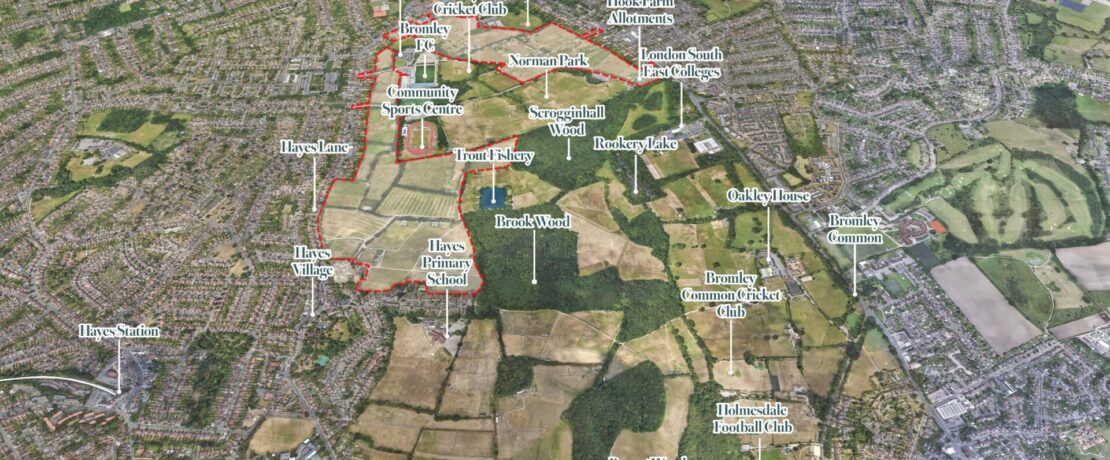
St Mary Cray is not the only site in Bromley threatened by development. There are plans to build 2,000 new homes on 145 acres of fields adjacent to Norman Park and Brook Wood. Again, the green belt land has been described as “grey belt” by the developers involved in the project. Local campaigners Keep Bromley Green are fighting back.
The developers directly claim that it is the government’s policy which is allowing them to develop these fields which are also protected Green Belt, saying “The Government’s recent “Grey Belt” policy now allows sites like Ravensbourne Place – which no longer fully serve the Green Belt purposes and are well connected to local services – to be considered for sensitive, sustainable development.
The also claim: “This approach can help deliver much-needed homes, including 50% affordable housing– though no developer has achieved anywhere close to 50% affordable housing in such a development and most manage to whittle it down to under 10% claiming, later on, that their ‘viability assessments’ have changed. And.. , while respecting the area’s character and environment” – something entirely disputed by local people.
As well as risking irreversible green belt loss and causing potential harm to local wildlife, the area is impractical, lacking the necessary infrastructure, such as transport, schooling and health facilities. On top of that, the borough is designated an “Area of Serious Water Stress” and part of the site lies within a flood zone. Development risks causing higher car dependency and stress to existing resources, and may put residents at risk of flooding. (Read more here: Protect Our Green Belt)
Crews Hill & Chase Park New Town, Enfield
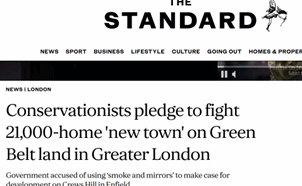
Land in Enfield earmarked for the Crews Hill & Chase Park New Town, including Vicarage Farm, has also been referred to as low value land by developers and land owners. Commonly described as “low value land” and “lower quality greenfield land” – there are clear indications that there will be a move to de-designate the land from Green Belt despite its special historic landscape and despite it being productive farmland and green fields.
We should be building on brownfield land instead
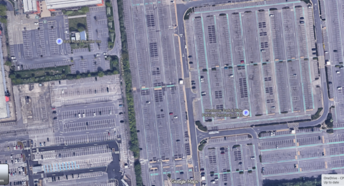
As CPRE London has stated before, there is no need to pave over the Metropolitan Green Belt when there is brownfield land in London and planning permission in place for 300,000 homes that are not being built. (Read more here: As the London Plan consultation is published, we write A Letter to London)
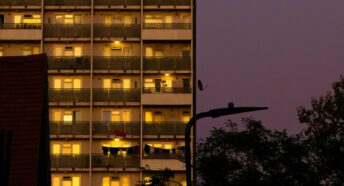
There is a housing affordability crisis but building on the Green Belt is not the solution. Evidence shows that just building homes will not make them cheaper. The crisis is not simply about the quantity of homes, it is about how many people can or cannot afford to live in them. Landowners and developers should not be allowed to cash-in on the countryside, using cheap land they bought years ago, and leaving the brownfield land they own lying idle.