


A new “Accessible Green Space” policy introduced in the Draft London Plan

The Draft London Plan marks an important shift in how green infrastructure could be planned by introducing Accessible Green Space (AGS) as a new policy measure.
So, what is it?
The Draft London Plan defines Accessible Greens Space as:
Green space that is freely accessible for the public to use. It can either be space that is specifically provided for public access; a space to which the public would usually expect to access (such as a cemetery); or a space to which there is a public right to open access, and therefore deemed likely to be accessible to the public at any reasonable time, with free entry. AGS should be available to all, meaning that every reasonable effort is made to comply with the requirements of the Equality Act 2010. Natural England defines a range of applicable green space types included within the definition of publicly accessible greenspace (see Natural England Green Infrastructure glossary).
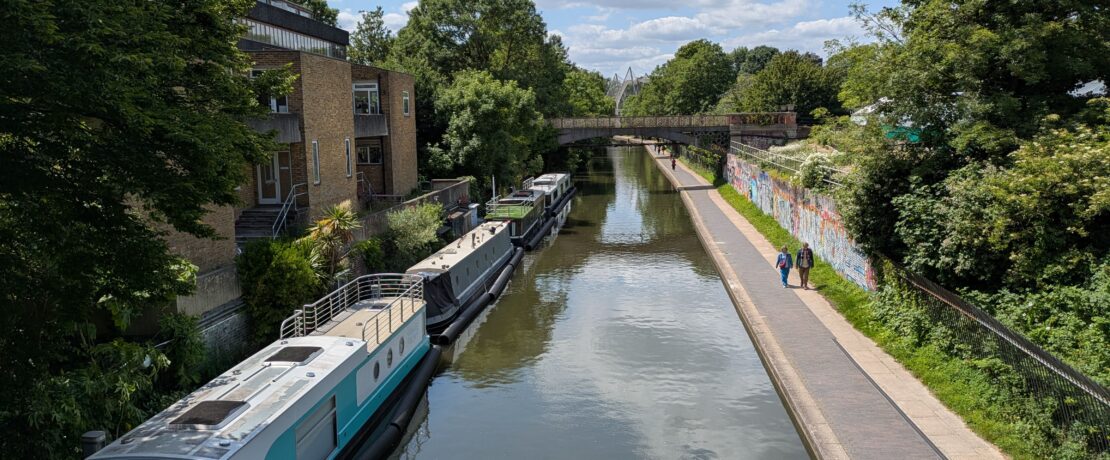
By providing a framework for assessing access to green spaces of different sizes within reasonable walking distances, the policy aims to ensure that Londoners can benefit from nature regardless of where they live. AGS must be accessible to all: compliant with guidelines around access for those with disabilities, open and welcoming for users from different backgrounds; as well as being physically present, publicly accessible and within proximity to its expected users. Its form is not limited and may range in size from greenery along an active-travel enabled canal towpath, to a large metropolitan regional park. Accessible Green Space provides a myriad of benefits, including active travel routes, shade and shelter, localised cooling, flood mitigation, cleaner air, safer spaces and pleasant places to dwell.
The current London Plan does not recognise Accessible Green Space as a distinct from open space, although it broadly advocates for the creation and maintenance of public accessibility. CPRE London are pleased to see this positive policy move in the Draft Next Plan, acknowledging the importance of sensitive land designation in creating and safeguarding green spaces.
What could the policy mean for London?
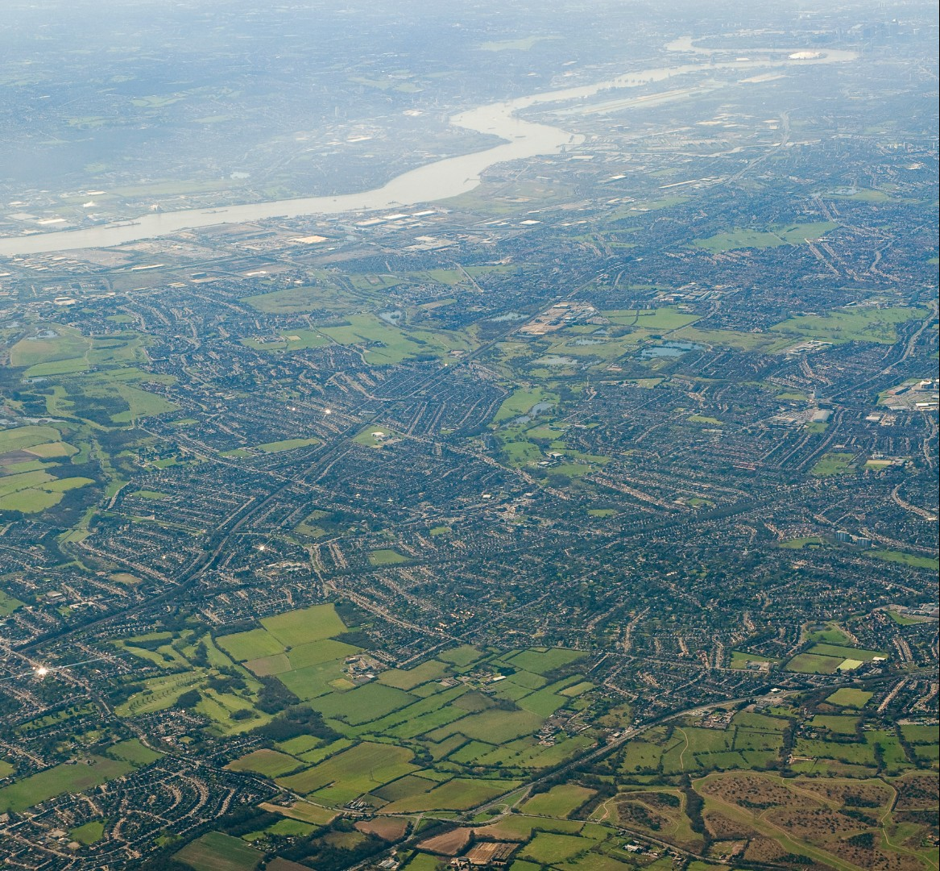
London is renowned as one of the greenest global megacities, to which its Accessible Green Spaces (AGS) are fundamental. However, many of London’s residents – both permanent and ephemeral – still experience a deficit in access to open and accessible green spaces.
Actions under draft policy GHR8: Accessible Green Space are summarised as: “Boroughs should identify and protect accessible green spaces, set local standards, and plan for new provision as part of growth. Meanwhile, development proposals should protect existing public open space and where they are creating extra demands, they should help deliver new or improved green space.”
AGS of all sizes should be considered: larger AGS are able to serve a greater portion of the population while having a greater range, and smaller AGS may be more suitable for implementation at a street corner, or between buildings.
Although the draft policy raises that up-to-date Areas of Deficit (AOD) for AGS at different scales (walkable/strategic) should be designated, CPRE London wants to ensure this actually happens at the local level. We have flagged that potential or existing accessible green spaces absolutely must not be lost due to delays in formal designation. CPRE London have also called for GHR8 to be amended to fully acknowledge the ways in which AGS may be lost or undermined through impermanent means such as creeping commercialisation and spatial neglect creating antisocial behaviour, which can discourage or prevent use. The policy should therefore require boroughs to consider the scale, frequency, duration and cumulative impact of commercial events, activities, concessions and other uses on public access, informal recreation, biodiversity and the overall character of parks.
We are pleased to see there is clarity within the implementation section that the quantity standards for AGS should be separate to requirements for dedicated play-space and sports provision, although such types of infrastructure may often be delivered in a spatially integrated manner.
Other Draft Policies to Consider
Several policies within the Draft London Plan could support the delivery of AGS.
For example, policy MBUL8: Inclusive Design seeks to create a city that is accessible for all. The Draft Next London Plan makes a distinction between inclusive design and public realm improvements, which was not present in previous iterations of the London Plan. To achieve its goal, MBUL8 should be amended to make clear that inclusive design must include equitable access to healthy, green and climate-resilient environments, incorporating shade, trees, accessible green space and attractive walking routes so that public spaces are capable of remaining usable during periods of heat and heavy rainfall.
Policy MBUL9: Healthy Streets and Public Realm aims to make London’s streets safer, more accessible and more welcoming for walking and cycling. However, greening the public realm is given little prominence. While MBUL9 references biodiverse planting, we have asked for the policy to explicitly encourage simple, visible nature-based solutions that can transform everyday streets and spaces: from more street trees, rain gardens and kerbside planting to greener front gardens, parklets and community gardens. By connecting these local improvements into a wider green network, London can create neighbourhoods that are more resilient to climate change, richer in nature and easier for everyone to access and enjoy. This involves the creation of smaller AGS wherever possible and a more integrated policy framework, where AGS is intrinsic to healthy and safe streets and public realm.
What next?
The introduction of Accessible Green Space (AGS) in the Draft London Plan is a welcome and important step forward. By focusing on whether people can easily reach and benefit from green spaces, the policy recognises that access to nature is a fundamental component of healthy, inclusive and sustainable communities.
However, AGS should not be treated as a standalone policy. Its success depends on stronger alignment with policies on biodiversity, tree planting, inclusive design and healthy streets, ensuring that access to nature is embedded across all aspects of planning and development. Following our response to the Draft London Plan, CPRE London hope to see the policy strengthened to recognise that the value of green space is not determined by quantity or even accessibility alone, but also by its specific history and role within London’s wider green infrastructure network. New and existing AGS should be protected, planned and managed as essential strategic infrastructure, supported by meaningful community engagement, long-term funding and maintenance commitments, and strong safeguards against loss or gradual erosion. With these improvements, Policy GHR8 would provide a more effective framework for ensuring London’s growth is supported by equitable, resilient and high-quality green infrastructure for current and future generations.
The Draft London Plan is not due for adoption until 2028. In the meantime, to protect your local green spaces, we encourage taking stock now of what is or could be considered “Accessible Green Space” in future, raising this to the Local Authority for potential designation and referring to our practical guide Save a Green Space.
Share your experience
We’d love to hear from you! Let us know how you respond to the Draft London Plan by reaching out to us at planning@cprelondon.org.uk or tag us on social media @cprelondon.
You can also support CPRE London by donating or becoming a member to help us influence decision-making and protect and enhance London’s green spaces for all.