

Government must take action to stop sprawl and revive buses

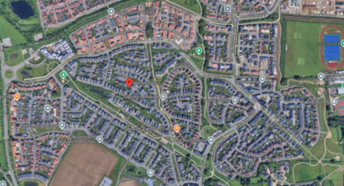
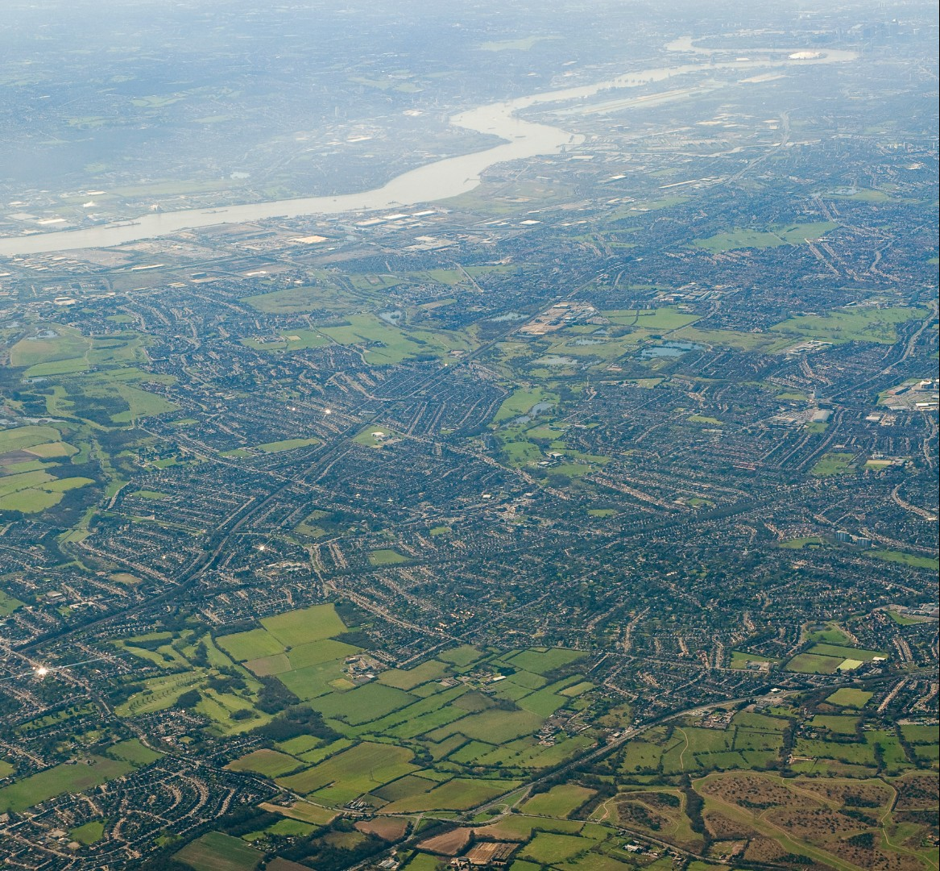
Successive governments have not just allowed, but enabled urban sprawl into the countryside.
But two simple changes will not just promote urban regeneration, instead of countryside sprawl – they will also help revive England’s buses. So what are these two changes? (You can find out more about our work on parking policies here.)
- One is to actively promote low ‘parking standards’ in new housing developments. That means new housing development should have very little car parking, on the assumption that people will not need to own or use a car. That will ensure development happens within town centres and does not generate more and more car trips.
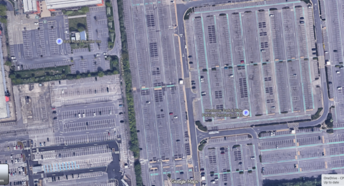
- The second is to actively encourage the use of surface car park sites within town centres to accommodate new housing or ‘mixed-use’ development (commercial and residential). That will ensure housing is built in locations where people do not need a car while also encouraging people to use buses which will increase fare income, and making town centres more vibrant as well. Vast amounts of land in town centres in England is given to surface car parking.
National policy needs to support Local Authorities to put in place appropriate parking policies to promote better, financially-sustainable public transport. Government should:
- Introduce a policy or guidance promoting ‘low car’ development, including a presumption in favour of ‘zero car development as a starting point’ for housing and mixed-use development (but accommodating disabled parking needs and car clubs if necessary).
- Delete NPPF paragraphs 113 (presumption against parking maxima) and 112d (relevance of local car ownership levels). [4]
Introduce an NPPF policy presumption in favour of redeveloping under-used, town-centre sites particularly surface car parks and single-storey, car-dependent retail sites like supermarkets and ‘big box’ retail, for new homes and other services. The redevelopment of multi-storey car parks could also be encouraged.** - Introduce ‘Grey Space’ policy into policy or guidance, to promote the redeployment of space currently allocated to roads and car-parking e.g. to accommodate recreation or play, sustainable drainage or building, trees and benches, recognising how this will also reduce traffic. Grey space takes up significant land in urban areas, with major negative impacts for transport and environment outcomes: its exclusion from spatial strategy undermines the ability of town planners to deliver effective place-making to improve the attractiveness of an area that will boost the economy as well as improving people’s quality of life. It also hampers a council’s ability to manage surface water, air temperature and quality, and biodiversity habitat.
**Para 113. NPPF. “Maximum parking standards for residential and non-residential development should only be set where there is a clear and compelling justification that they are necessary for managing the local road network, or for optimising the density of development in city and town centres and other locations that are well served by public transport (in accordance with chapter 11 of this Framework). In town centres, local authorities should seek to improve the quality of parking so that it is convenient, safe and secure, alongside measures to promote accessibility for pedestrians and cyclists.” Para 112. NPPF. “If setting local parking standards for residential and non-residential development, policies should take into account: a) the accessibility of the development; b) the type, mix and use of development; c) the availability of and opportunities for public transport; d) local car ownership levels; and e) the need to ensure an adequate provision of spaces for charging plug-in and other ultra-low emission vehicles.”