

Why London needs a Sports Development Strategy. Now.

CPRE London has been supporting local groups to fight off threats to playing fields for years. But what’s really needed is the creation and delivery of a sports development strategy for London.
We’re not talking about professional sports – we’re talking about recreational sports.
CPRE London is widely known as an organisation which supports local groups around London to save their local green spaces when they come under threat from development. We are often contacted about playing fields and other outdoor sports facilities and it’s fair to say these form a major part of our case load. So we now have a pretty good understanding of the problems in London.
We have learned that playing fields are often in private ownership, owned or leased by clubs; that the land sometimes has a covenant for sports use or other legal protection; and that in London, land is often protected Metropolitan Open Land or Green Belt designation (and was most likely originally given the designation to protect is for sports and recreation).
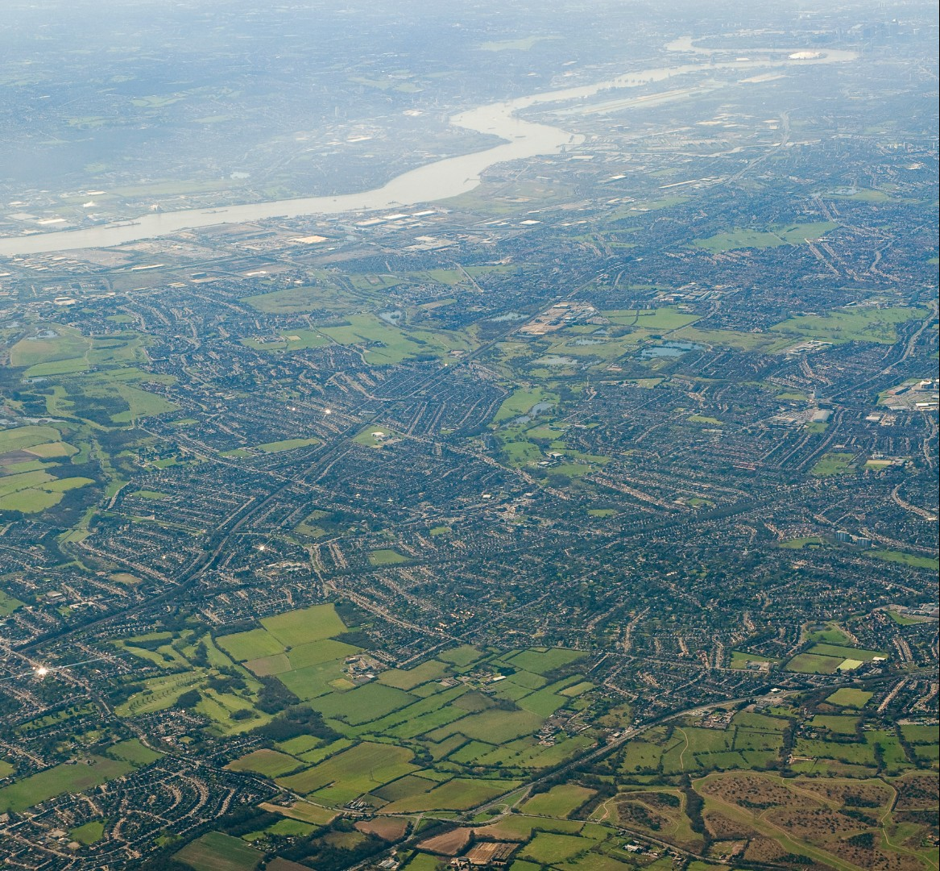
- Our attempt at mapping London’s Playing Fields shows how few are left in many parts of the city – and how important it is that we protect what we have. (Data from Open Street Map)
PART 1: WHY ARE PLAYING FIELDS AND PITCHES COMING UNDER THREAT?
The London Playing Fields Foundation eloquently described the cycle of decline in their 2015 Fields of Dreams report: “… a lot of fields are lost because of neglect …As they become neglected, so they’re underused, and because they’re underused there’s no investment … the under investment leads to undervalue, and eventually that undervalue leads to under threat, and they’re gone.”
Added to this, many playing fields are deliberately taken out of use, the owners looking to sell the land for its ‘hope value’, hoping to gain planning permission, which hugely increases the value of the land. When local residents contact us, they often say – “we remember sports being played here, but haven’t seen anyone playing for years”.
More recently, even pitches which are well used are coming under threat. Golf courses have become a particular target for commentators (and now even the London Mayor) who claim, without basis, that golf is ‘publicly inaccessible’ – a thinly veiled attempt to get land released for housebuilding. We have written elsewhere about why building on London’s protected land won’t solve the housing crisis anyway.
Sadly, another problem we have seen far too much of is professional sports clubs bidding to take over facilities which are intended for recreational sports.
SEE PART 3 below where we list all the threats to sports pitches we’ve been involved with in recent years
The real problem underlying all of these: no sports development strategy
The number of people playing sports is determined by the availability of pitches or other facilities, as well as the existence of clubs and leagues, how well run they are, and whether they are promoted effectively. But currently there is no London-wide strategy or system for promoting the development of recreational sports, support clubs and facilities/pitches.
The only statutory requirement in relation to sports pitches is that councils must produce Playing Pitch Strategies which attempt to make sure ‘demand’ is met. The problem is these don’t look at latent demand i.e. where people would play if there were facilities or clubs. They are concerned with the quantity of pitches, not the development of clubs and opportunities to play. Some boroughs support sport club development but it is an inconsistent picture and often absent entirely.
Another issue is that the system for managing playing pitch provision (boroughs create a Playing Pitch Strategy) functions at borough level, which makes little sense when leagues are played at regional or sub-regional level. And the system of protection is underpinned by assessment of current demand – which also has its problems as it doesn’t account for latent demand.
- Borough-level Playing Pitch Strategy. This makes little sense when (a) sports leagues operate across borough boundaries and even across the wider region – for example the East London and Essex League – and (b) some boroughs have crucial super-hubs (like Hackney Marshes) which serve many boroughs, while other boroughs have next to no provision (like Islington). Provision needs to be planned at a minimum at London-wide level and probably in fact City Region level to reflect interaction with surrounding counties.
- ‘Demand’ defined protection. There are two problems here. One is this system ignores latent demand which is suppressed because of lack of facilities. But it also ignores the importance of well organised leagues and facility managers in developing demand.
The club sports system – how recreational (non-professional) sports are played in London
Sports are sometimes played at pay-and-play facilities e.g. badminton courts at the local leisure centre or tennis courts in parks; sometimes at free ‘turn-up-and-play’ e.g. on pitches in parks which don’t need booking; and often via clubs who lease grounds and run training sessions and teams; or sometimes lease a pitches or sports halls, perhaps on a termly basis. There is often competition between clubs and there is, to our knowledge, no coordinated effort to help clubs find venues, whether for a season or for a long-term lease. It’s worth adding that clubs need long-term leases (like 25 years) to secure grant funding for grounds improvements.
EXAMPLE A few years ago, we wrote about Lewisham AFC who had been looking for a home for years. Finally, a local activist helped them negotiate a lease with the owner of Bowring Sports Ground which had been out of use for eight years while the owner tried to sell it and while locals fought off a planning application. Josephine’s story about AFC Lewisham helps explain why sports clubs are essential to saving London’s precious green spaces.
PART 2. WHAT TO DO?
Pitches and clubs/leagues go together – you can’t discuss one without the other: the Mayor should convene the creation and delivery of a London Recreational Sports Development Strategy
Our experience is that working to protect playing pitches on their own is not helpful. It is the pitch and the club, clubs, leagues or players which use it which need support, development and – if you like – ‘protection’. We feel that, if you want to stop playing fields coming under threat, you need to work with the clubs, sports authorities, leagues etc. and develop and deliver a London Recreational Sports Development Strategy. Demand is a function of supply. It’s no good talking about ‘demand for sports’ being there or not being there. It has to be developed alongside clubs and facilities.
London Playing Pitch Strategy vs London Sports (Club & Pitch / Facility) Development Strategy
The London Plan should be underpinned by a London-wide Sports Strategy, which boroughs would then have to take account of in their Local Plan. It also needs to deliver much greater protection for existing and out-of-use pitches which need to be brought back into use. Policies should be introduced to the effect that:
- Mapping of pitches and facilities should underpin strategy and protections. We envisage this would show where more facilities are needed and identify potential sites. It would also afford individual pitches or smaller sites (with a few pitches) the strongest protection. Sites with major provision like Hackney Marshes would be identified and designated as Super Hubs – and particular policies developed for these, appropriate to their use for leagues etc., (this should not undermine smaller sites). All should be permanently protected for public recreational sports.
- When assessing playing pitch provision, boroughs should reflect the London Sports Development Strategy.
- Any playing pitches without Green Belt or MOL status should be given one of these designations, or Local Green Space status (same high level of protection).
- Pitches should be further protected by Fields in Trust where owned by local authorities.
- Landowners should be required by law or policy to take reasonable steps to allow the site to be used for its intended purpose or face a Compulsory Purchase Order.
- To the extent that different sports may be in competition with one another for grounds, strategy also needs to ensure fair provision for different sports.
- Sports strategy also needs to reflect the issues clubs have with attracting capital funds or funds for improvements or pitch maintenance if they do not have a long enough lease.
Understand the reasons sites are coming under threat (as above) and the status of fields at risk to help define the interventions needed
- Some sites are in use, and indeed well used. These rarely come under threat but it does happen and when it does there needs to be a strong push back, led by local clubs.
- Some sites are in use but in decline (in which case a relatively straightforward intervention to promote investment in the clubs and facilities is likely to make a big difference)
- Some sites are out of use. These are a high priority for action, with local councils and sports clubs involved, and a concerted effort needed.
Locate sports pitches which have been taken out of use – and work to bring them back into use
We now have a relatively good picture of the extent of the problem in London. A particularly concerning example is the Leigh Road Sports Ground in Newham which is in a deprived area with very little playing field provision, owned by Berkeley Homes who told us they are not likely to do anything with the site for at least five or ten years.
For all the sites, we have to research the ownership and establish if there are legal covenants or other protections which might enable the site being brought back into use for sports. We then have to find and work with local groups to campaign to get sites back into use. This has proven extremely difficult, though there has been some success (as per the AFC Lewisham story above).
For some sites, like the vast old Metropolitan Police Sports Ground, which we have little information on, is completely overgrown and has been out of use for years, a major effort would be needed to bring it back into use.
Parks for Sale
In relation to provision in parks, we have learned (as a result of the recent High Court judgement in the case of Sean Wilkinson / Whitewebbs Park) that councils can sell parks with impunity. This is an issue for sports authorities because there are many sports pitches in parks (the Whitewebbs Park site which is being sold, used to be a golf course, for example). New legislation is now needed to protect urban parks including the sports facilities within them. CPRE London will be campaigning on this in the coming year.
Particular concern about attitudes to golf / golf courses
Politicians and commentators should cease targeting golf and claiming it is ‘inaccessible’. They should also stop claiming the ‘housing crisis’ can be solved by building on golf courses. This is an extreme misrepresentation of the housing crisis and gives no consideration to the overall need for sports and recreation facilities in London: it presents a reductionist golf or ‘solve-the-housing-crisis’ choice which has no basis in any fact or evidence.
PART 3: THREATS TO LONDON’S SPORTS FIELDS AND PITCHES – LISTED
Here we list and give some details about the cases we have been involved with in recent years.
Threatened by development of housing etc.
- Shoreditch Park tennis courts in Hackney, where a leisure centre was built on the park tennis courts: these were to some extent ‘reprovisioned’ on the roof but of course that put a halt to informal use. The council said they had to build on this central London park, in a densely populated area surrounded by social housing, to enable the building of a new secondary school. The whole park was surrounded by housing estates. I made a film there – and interviewed a boy about how the local kids used the courts to play football informally: it’s poor quality audio (sorry!) but here’s the video. So sad. LOST. Ironically, schools are now closing in Hackney due to fall is school rolls. This perfectly demonstrates the short sightedness of building on parks.
- Oakfield Sports Ground in Redbridge: the council wanted to allocate the site for housing in the Local Plan. A major campaign meant the site was saved. SAVED.
- Finsbury Leisure Centre playing pitches in Islington. This is a live case: they are the only playing pitches in this central London area and the council is applying to build tower blocks (with some ‘reprovisioning’ on a leisure centre roof: we do not see this as reprovisioning at all). LIVE CASE.
- Barkingside Sports Ground. This was out of use for a long time and now the owners have applied for planning permission to build housing. Classic example of a site coming under threat after being out-of-use. LIVE CASE
Professional vs recreational sports: sites targeted by professional sports bodies. Astonishing though it may seem, this is a serious problem. Professional sports clubs use their weight (and cosy relationships with councils) to take over playing fields intended for recreational use.
- Wimbledon Park golf course was deliberately bought and closed by the AELTC who want to expand the Wimbledon Tournament into the site. Golf has been lost. LIVE CASE.
- Whitewebbs Park golf course. Enfield Council has leased this to Tottenham Hotspur and will no doubt give them the planning permission they want to develop a training centre for their women’s team (of course we support women’s football, but they could build this in many other locations than a public park). Big fight going on here. LIVE CASE.
- Oakfield Sports Ground (yes these guys again). Redbridge council were poised to lease the site to West Ham FC. Currently SAVED from this particular threat but see below…
- Greendale Park, informal playing pitch was sold to developers who were supposed to build Dulwich Hamlet FC a new stadium on that part of the park. LIVE CASE.
Deliberately taken out of use by the owners who seek to landbank them and sell for ‘hope value’ (i.e. the new owners hope to gain planning permission). OR they fell out of use in the 1960s and 70s and they’ve have sat there doing nothing ever since.
- Two large pitches in Waltham Forest by the A406 (neighbouring a well-used playing pitch at Kingfisher Sports Ground
- Royston Gardens, Leigh Road Sports Ground and Barrington Playing Fields along the River Roding in East London, a very deprived area with little sports provision
- Quaggy Playing Fields (the friends group there are desperate for help to get a number of pitches back into use: we’ve been working with them for years – they managed to broker a lease for Lewisham FC- story here)
- Sites like the Metropolitan Police Sports Ground – which have been out of use for so long no-one even really remembers they were sports grounds. (It is certainly not marked as a sports ground on any maps.)
- Warren Farm pitches were left derelict for so long by the London Borough of Ealing that they became an incredibly important wildlife haven and the site is now being given Local Nature Reserve status with a view to developing sports pitches on nearby (out-of-use) fields.
Turn-up-and-play pitches being turned into fenced off pay-to-play
- Tooting Common red gra turn-up-and-play pitch. There was even a planning enquiry. SAVED
- Clitterhouse Playing Fields. This is a big open space used like a park but previously used as playing fields and informal sports. Following recent planning permission, it will be replaced with (randomly sited) formal, fenced, paid-for pitches. LOST for turn-up-and-play.
Rent hikes for community clubs. More recently, desperate councils are asking for huge rents, much too high for community clubs to afford.
- Oakfield Sports Ground and the Bealonians club who call it home – are under threat once again with the council forcing a tender exercise which this very big and well-established grass roots football club simply cannot afford.
Other…
- Low Hall Playing Fields recently came under when Waltham Forest announced they wanted to build a lido on Low Hall Playing Fields. This seems to have been kicked into the long grass
- Cricket Club (?Hornsey)– sometimes local clubs themselves seek to build on playing fields, something we would usually object to. [check the case with my colleague]
- David Lloyd has a record of building on protected land. These are privately run leisure centres usually with car parks. Leisure centres are important, but they should not replace open sports fields.