

 Contact us
 Visit CPRE.org
 Donate
New towns ‘distraction’ from tackling London affordable housing emergency

CPRE London responded to the London Assembly’s investigation into New Towns for London saying: “In short, new towns are not a credible route to tackle affordability of housing in London and certainly not in the short term. In fact, they are at best a distraction, and at worst likely to actively suck funding and human resources from other development, reducing the capital’s ability to tackle housing affordability in the short term.”
The call for evidence states the “The aims of the current new towns programme are to generate economic growth, accelerate housing delivery, provide the necessary infrastructure for new communities, create environmentally resilient places and to contribute to changing the way that large settlements are delivered.”
This side-steps mention of London’s the acute and urgent need for housing to be made affordable. Our primary concern about the ‘new towns’ approach is that this cannot tackle affordability and certainly not within the next decade or likely not even for 20 or more years. Tackling affordability can only be achieved by
- dramatically increasing supply of genuinely affordable housing, which cannot be achieved solely via the private sector development model
- making rents in the private rented sector affordable via rent controls with more teeth than currently-proposed ‘rent stabilisation’ measures (welcome as they are)
- increasing the housing benefit threshold to halt the transfer of households from the private rented sector into temporary accommodation. Currently there is an absurd situation where Government’s housing benefit threshold means housing benefit does not cover rent, so people cannot pay and become homeless and are then placed in temporary accommodation which is less secure, more expensive for the public purse, and threatens to bankrupt councils because they must cover some of the cost of temporary accommodation.
As such, we have significant concerns about the premise of building new towns, particularly on London’s green spaces and Green Belt:
Building ‘new towns’ is a major distraction from the real causes and solutions to London’s housing crisis – and even a distraction from getting the 300,000 homes in London which already have planning permission built
Building two ‘new towns’ at Crews Hill and Thamesmead will not increase the availability of housing over and above the amount which would have been built anyway because it will dislace other (already planned and permitted) development;
- New towns will displace development elsewhere, because only so much new housing can be absorbed into the housing market in any one year.
Building ‘new towns’ will not enable more affordable housing to be built, in fact will set London back in delivering affordable housing.
- New towns will use limited public funding which would or could have been used immediately to increase the supply of social-rent housing and much-needed infrastructure on already-planned (brownfield) developments elsewhere in London.
Delivering these ‘new towns’ will take decades and take vast resources to get off the ground. It will not help the linked crises of housing affordability and local authority finances in the near or medium term and arguably not in the long term either, unless national policy changes so that 100% uplift from land value can be captured under CPO. We believe 100% uplift from existing-use-value should be captured for the public (i.e. not paying for ‘hope value’ as per the 1961 legislation) but not for greenfield sites. This should apply strictly to brownfield sites and particularly surface car parks.
Public resources, both human resources and funding, earmarked for delivery of new towns would be put to much better use, much more quickly, to deliver housing affordability in London by using available funds to purchase or build property for social rent, including by increasing the quantity of affordable housing in developments which already have outline or full planning permission, ensuring an actual impact in the short term.
Planning permission is in place for 300,000 homes on brownfield land in London and there is enough brownfield land to accommodate at least double that amount, likely more. It is no secret that many of these developments have been stalled. Public resources would be better directed to getting those developments moving, and to ensuring they deliver affordable housing and public infrastructure. Delivering ‘new towns’ will simply displace planned and permitted brownfield development and will redirect valuable public resources from those developments.
Crews Hil
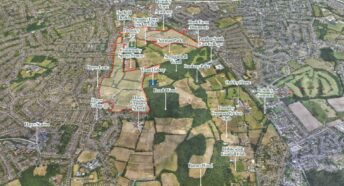
Crews Hill is Green Belt land. It is not ‘grey belt’. There is no way of making a ‘new town’ in that location sustainable from a transport point of view: it will increase car trips in direct contradiction of the Mayor’s Transport Strategy and the London Plan. It will lead to extensive biodiversity net loss.
Thamesmead
Thamesmead is theoretically ‘brownfield’ but very clearly has rewilded and is now a green space. Parts of it are SINC and designated open space. The claims for ease of delivery around the Thamesmead Waterfront site ignore the complexity and costs of this site, particularly (we understand) its historic use for landfill and ordnance dumping. It is also a site which could and should be safeguarded for vital water treatment infrastructure.
Safeguarding land for urgently needed water treatment capacity. Thamesmead proposals ignore the very real possibility that this site will be needed to accommodate new water management infrastructure given Thames Water has said nearby Crossness Sewage Treatment Works needs to be expanded urgently, but the site is constrained, and that it is likely to reach its ‘discharge permit capacity’ soon which indicates discharges are already much too high.
There is further likelihood that climate change will mean sites like this will be needed to manage surface water and potentially even fluvial flood management.
Nearby planned re-development of the nearby Thamesmead Estate can deliver new housing particularly if the Morrissons surface car park is redeveloped for housing. This can benefit from the new DLR station and has a greater chance of being delivered in realistic timescales. The focus should be on that.
The above points are important context in relation to the questions asked, and CPRE London’s responses.
1. What are the conditions that need to be in place to make new towns a success in London?
a. How should citizen engagement, consultation and coproduction inform the development of new towns?
b. How can delivery partners ensure that essential infrastructure is in place to ensure the success of new towns?
CPRE London Response: In the current circumstances, there are no conditions which could be put in place to make ‘new towns’ successful as a means to tackling affordability and availability of housing in London and, on the contrary, they are a major distraction from identifying a credible response to the housing crisis.
2. What new opportunities could new town designation in London unlock that existing planning tools do not?
CPRE London response: ‘New towns’ are not different to large housing developments being delivered, or planned, in many other parts of London, in the sense that those other large developments require infrastructure and need to deliver affordable housing. Creating a ‘new mechanism’ will not make it any easier, will be a distraction from delivering planned and permitted development, and will suck resources away from delivering those developments which have a stronger chance of being delivered in short and medium term timescales.
3. What density, design and placemaking principles should underpin London’s new towns?
CPRE London response: Density for any development should be high and appropriate to the location. We support high density development of 5 to 8 storeys with zero car (car club and disabled parking only) and appropriate green space which can meet the variety of needs a local park might deliver, including for example it being possible to play informal sports – kick a football about. It is not appropriate to only provide e.g. ‘linear parks’ or spaces which can only be used for very limited activities.
4. What lessons can be learned from the past delivery of Mayoral Development Corporations (MDCs), Opportunity Areas (OAs), and the original development of Thamesmead (in the late 1960s to early 1970s) to inform the development of new towns for London in the present day?
CPRE London response: The clear and obvious lesson is that, if funding is available and appropriate authorities have the power and resources to deliver, affordable housing can be delivered. Without those resources, it feels like a strange comparison.
5. What lessons can be learned from international examples of new towns?
CPRE London response: This is impossible to answer without an understanding of whether those countries had other policies in place in relation to, for example, land value capture or housing affordability. These are choices, they are not technical problems.
6. What roles should the Mayor, GLA, London boroughs, and central Government each play in planning, funding and delivering new towns in London?
a. What governance structures should be implemented to ensure the long term success of new towns in London?
CPRE London response: To the extent that any new structures should be created, they should focus on delivering the major (brownfield) developments in London which are stalled.
7. What are the potential environmental impacts of new town development in London on food and water security, climate resilience and access to green space?
We do not see the implications of new towns as different from other major developments, except that both will be built on green space (one rewilded, one never-before-developed Green Belt); that it will be impossible to deliver biodiversity net gain and will certainly deliver net loss; and in the case of Thamesmead Waterfront, it may impact negatively London’s ability to increase the waste water treatment capacity so urgently needed (given this site may be needed to accommodate water treatment infrastructure).