

London wildfires risk ignites urban sprawl debate

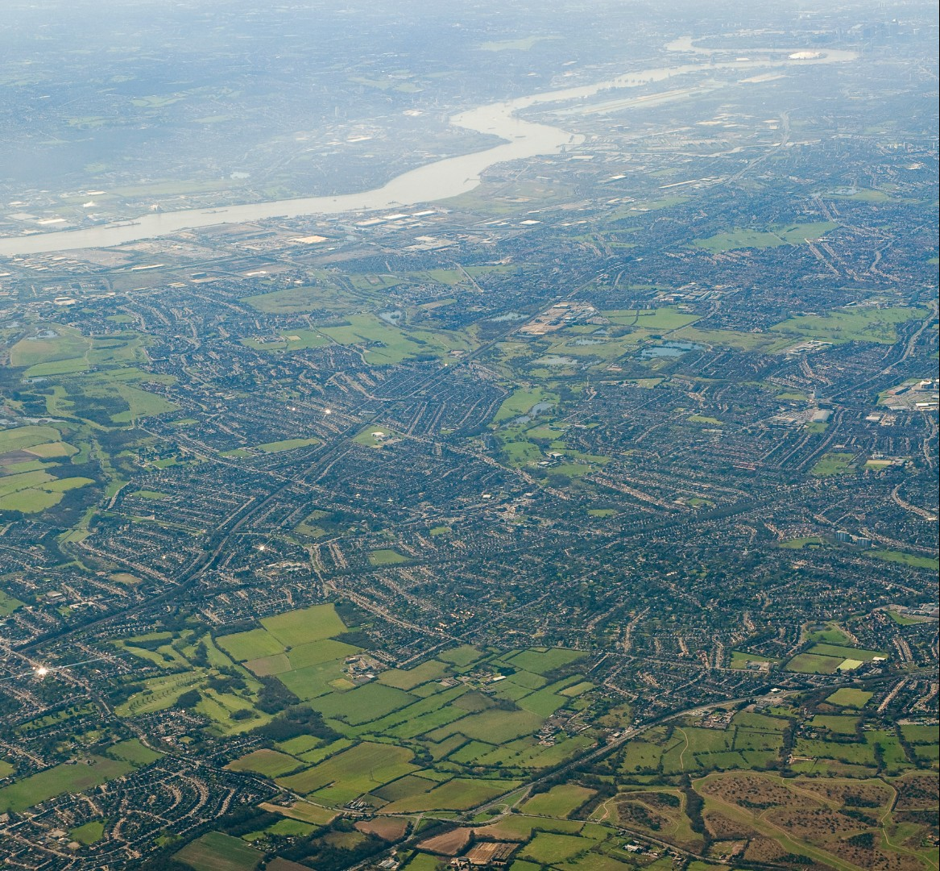
CPRE London has long campaigned against urban sprawl for many reasons. But now Ordnance Survey mapping has given us another – it shows thousands of homes on the edge of London could be at increased risk of wildfires.
The research by Ordnance Survey (OS) and The i Paper adds more weight to our arguments for ‘compact’, efficient and healthy cities, where land is used more efficiently, we recycle sites in need of regeneration, and where people can live close to jobs and amenities and get around more easily by public transport, walking or cycling.
The Mayor is also coming under pressure from further research on heatwaves and wildfires.
Where wildfires occur
The data has found seven per cent of UK homes are within 100 metres of the edge of a town or city, known as the rural-urban interface, where most wildfires occur. According to the research, 48,553 of these homes are on the outskirts of London.
This comes as the capital is experiencing another heatwave, which has seen London Fire Brigade tackle nine of 2025’s 14 wildfires in June alone. Temperatures over 30 degrees and very low rainfall have created tinder-dry conditions across the capital’s open spaces, increasing the risk of fires.
This OS data is being used to identify suitable areas for development, considering factors such as existing infrastructure, natural resources, and potential ecological impacts. The outskirts of London, Sheffield and Coventry have the highest number of homes in these at-risk zones.
Lose-lose scenario
“Building on Green Belt is a lose-lose scenario,” says CPRE London’s Alice Roberts. “We lose our countryside with its agricultural land, wildlife habitats and beautiful green spaces and create a high-carbon, car-dependent, unhealthy city.
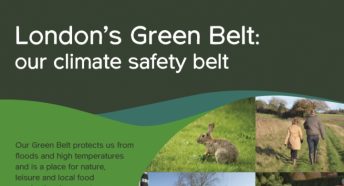
“And now, as temperatures rise in the face of climate change, there’s the risk of wildfires. We’ve always said the Green Belt is our climate safety belt, so how many more reasons do we need to stop development on it?”
Read more about our campaign against urban sprawl, here
Read more about how the Green Belt can help mitigate the impact of climate change, here
More research on heatwaves, wildfires and housing, here