

 Contact us
 Visit CPRE.org
 Donate
How car parks downgraded our towns and cities

How car parks downgraded our towns and cities
A guest blog by Darryl Rigby
What do historic venues like The Cavern Club, Queens Hall and Wigan Casino all have in common? Well, aside from being incredibly iconic nightspots that helped weave the fabric of British nightlife culture in the second half of the twentieth century, each of them was eventually knocked down and replaced by a car park.
Despite these cultural landmarks putting on world-famous club nights or hosting legendary concerts by rock royalty such as The Beatles and Pink Floyd, and rather than being preserved or turned into museums to educate future generations about Britain’s rich musical history, they were bulldozed to make space for car parking.
As 60s icon Joni Mitchell put, they paved paradise to put up a parking lot, reportedly writing the song on a trip to Hawaii after discovering a vast stretch of beautiful landscape had been ripped up to install a car park.
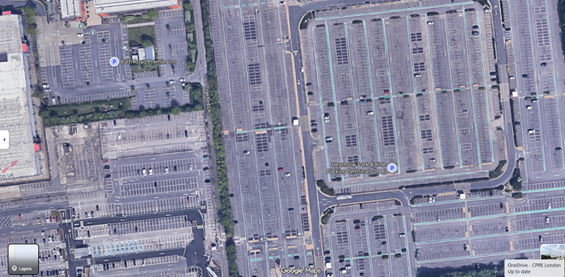
Since then, many famous buildings — as well as a great deal of green land — have been lost to car parking. The amount of space they take up is now truly staggering. Excluding multistorey car parks, across the UK there are around 103,000 private and public surface car parks occupying about 20,000 hectares.
One of the many consequences of planning around cars is that it has disconnected us from the character and heritage that made many places worth visiting in the first place. Another is that the car parks often take space in town centres which are ideal locations for housing, green infrastructure and businesses all of which make valuable contributions to our communities. Car parks also encourage people to take the car instead of use the bus, which has led to less fare income and ultimately cuts to services.
As the country grapples with multiple crises over housing, rising urban temperatures and declining biodiversity in our cities and towns, we need to re-think how we use space, what we prioritise, particularly in our town centres.
Encouragingly, some cities are now recognising the issues caused by large amounts of space given to car parking, including how it is linked to high levels of traffic. In 2020 Paris promised to transform over 70,000 parking spaces into bike lanes, outdoor seating and tree-lined walkways.
A 2021 article reported how Norway’s capital, Oslo, reclaimed hundreds of bays in its city centre and replaced them with community spaces, while Utrecht in the Netherlands has gone even further, replacing car park zones with canals, playgrounds and plazas.
Some English councils are starting to see the benefits of re-thinking parking policy. Lambeth has produced its kerbside strategy, for example. And climate campaigners Possible, alongside CPRE’s London branch, have created a tool for local authorities and residents to assess local parking policy from a sustainability angle.
All this isn’t to say parking is no longer needed. But could local authorities be better utilising the space they have, and can more be done to encourage people to use cleaner forms of transport instead of cars?
Parking policy on the move
Evidence shows that park and ride schemes reduce pressure on central space, reducing pollution and congestion in the town or city, protecting historical architecture and removing the need to use prime real estate for parking. One of the biggest success stories has been in York, where the city’s network has resulted in fewer cars entering the historic centre. In 2024, York’s six park and ride sites recorded over 4.5 million passenger journeys, and during December alone that kept over 61,700 cars out of the central zone.
Other ways to reduce traffic in built-up areas include filtering out through-traffic with Low Traffic Neighbourhoods, and prioritising bus and cycle lanes, pedestrian zones and safe crossings to encourage more people to walk, cycle or take the bus instead of driving. Introducing secure bike storage, e-bike hire stations and cycle-to-work incentives can also help.
Councils are required to use any surplus income from their parking services on transport and many use it to improve sustainable travel options or subsidise concessionary fares, for example. At a time when councils are facing financial stress, however, more funding will be needed and councils will need to think very carefully about their parking policies including pricing, if they want to gain the very many benefits of releasing car parking space, and shifting a proportion of car journeys to other more sustainable modes.
This guest blog was written by Darryl Rigby, Content Executive at TradeSparky, an electrical wholesaler specialising in solar panels and EV chargers. Darryl’s work within the green energy sector has ignited a strong interest in environmental issues, with a particular focus on producing content that highlights how both human behaviour and government policy are shaping our planet.